


A refill only cuts waste when its dispenser stays beside the sink. Packaging, refill size, shipping weight, and repeat use decide whether the greener-looking option delivers.
Shop AEP Scent Hand Soap Refills ->
An eco friendly hand soap refill lowers waste by keeping a durable dispenser in use while replacing repeated single-use bottles with lighter, material-efficient packaging. The strongest options disclose exactly how much plastic they avoid, provide enough soap for multiple fills, and fit a pump you will keep using. For example, AEP Scent's 1000mL kraft-paper pouch fills a standard 500mL bottle twice and uses 80-85% less plastic than traditional luxury bottles. That matters because the EPA reports that producing and converting fossil fuels into new plastic products caused 90% of plastics life-cycle greenhouse gas emissions in 2019. Choose a format that balances less packaging with a formula, scent, and routine you enjoy, since an unused reusable dispenser cannot reduce future bottle purchases.
The real question is not whether a pouch looks sustainable, but whether the full refill system prevents more material from entering your routine. Next, "What actually makes an eco friendly hand soap refill lower waste?" tests the claims that matter, from packaging reductions to dispenser reuse. Here's how.
What actually makes an eco friendly hand soap refill lower waste?
A lower-waste refill changes the package used for each new supply of soap. It keeps a durable pump in use and replaces repeated rigid bottles with lighter refill packs. This matters because plastic can remain in the environment for centuries, according to the EPA's review of plastic pollution.
The word "refill" alone does not prove a product cuts waste. Shoppers should compare the full system: dispenser life, refill packaging, soap volume, shipping space, and clear proof behind each claim.
Less packaging per hand wash
Start with the material thrown away after the soap is used. A good refill uses much less plastic than a new pump bottle. It also provides enough soap to make each pack useful. AEP Scent's kraft-paper pouches use 80-85% less plastic than traditional luxury bottles.
Each 1000mL pouch can refill a standard 500mL bottle twice. That makes an earthy hand soap refill part of a repeatable system, rather than another single-use purchase. Compare refill volume and package weight before relying on broad green labels.
A dispenser built for repeat use
The pump bottle is the lasting part of the system. It should be sturdy, easy to clean, and simple to fill without spills. If a dispenser breaks early or is hard to reuse, much of the refill's waste benefit can disappear.
Refill format also affects storage and shipping. Flat pouches and concentrated formats can need fewer boxes than rows of rigid bottles. Yale found that two concentrated soap bags replaced 60 throwaway containers in one campus program. Its refillable soap case study also notes fewer boxes, lower cardboard waste, and less work moving supplies.
Claims that can be checked
Look for a clear comparison behind every waste claim. A useful label states what material is reduced, which package serves as the baseline, and how much soap the refill contains. It should also explain how to handle the empty pouch.
Formula transparency belongs in the review, too. Check the full ingredient list, how the soap is tested, and whether use directions are clear. Packaging that cuts plastic is useful only when the soap works well enough to keep the dispenser in regular use.
- Choose a durable pump that can handle many refill cycles.
- Compare plastic use and soap volume against a standard bottle.
- Check whether the pack stores and ships with less wasted space.
- Favor specific, verified claims over vague green language.
Refill formats compared: pouches, cartons, tablets, bars, and bottles
The best eco friendly hand soap refill depends on what matters most in your home. AEP kraft-paper pouches balance a low-plastic pack with ready-to-use liquid soap and a refined scent. Tablets and bars cut shipping weight further, while cartons and plastic bottles make refilling simple.
Packaging deserves attention because discarded plastic lasts for a long time. The EPA explains that plastic pollution may take 100 to 1,000 years or more to break down. A refill format can reduce repeat packaging, but its daily fit will decide whether you keep using it.
Side-by-side refill choices
Use this table to compare the main tradeoffs before buying. Consider the pump you own, how much storage space you have, and whether you want liquid or bar soap.
| Format. | Packaging and shipping. | Ease and compatibility. | Scent and hygiene. |
|---|---|---|---|
| AEP kraft-paper pouch. | Uses less plastic than a new bottle; ships as liquid. | Pour into a clean reusable liquid-soap dispenser. | Ready-to-use formula keeps scent and texture consistent. |
| Plastic bottle refill. | Ships as liquid; uses the most plastic here. | Easy pour; works with many liquid-soap pumps. | Ready to use with no home mixing. |
| Carton refill. | Paper-led pack may still include a liner; ships as liquid. | Easy pour; check spout and local recycling rules. | Ready to use with no home mixing. |
| Refill tablet. | Dry and light to ship; little storage space needed. | Needs water, mixing, and a compatible foaming pump. | Scent develops after mixing; clean bottle first. |
| Bar soap. | Compact and water-free; often has little packaging. | No dispenser needed; requires a draining soap dish. | Direct scent experience; keep dry between uses. |
Ready-to-use liquid versus mix-at-home soap
Pouches, cartons, and bottle refills arrive ready to pour. They suit shoppers who want an easy refill and a steady scent from the first wash. AEP pouches also work with permanent dispensers, so you can keep the bottle and replace only the refill pack.
That approach can reduce both waste and supply-chain bulk. In one refill program, Yale replaced 60 throwaway containers with two concentrated soap bags. The exact gain at home depends on the pack, its materials, and how often the dispenser is reused.
Tablets remove most water from the shipped refill, which makes them compact. Yet they add a home mixing step and often need a foaming pump. Wash and dry the dispenser before mixing, follow the brand's water directions, and avoid topping off old soap.
The right fit for your sink
Start with your preferred wash experience. Choose a pouch when you want ready-to-use liquid, a premium scent, and less plastic than a new bottle. An earthy hand soap refill also shows how a scent-led option can fit a reusable dispenser routine.
Choose tablets when low shipping weight matters more than mixing time. Pick a bar when you do not need a pump and can keep it dry. Cartons offer a familiar liquid refill, while plastic bottles favor ease but create more rigid packaging.
Why reusable dispensers matter more than the first bottle
The first bottle is not where a refill system creates most of its value. The larger gain comes when one dispenser stays in use through many rounds of soap. A durable pump turns packaging from a repeat purchase into a one-time part of the bathroom.
An eco friendly hand soap refill makes that repeat-use model simple. AEP Scent's 1000mL pouch refills a standard 500mL bottle twice. That clear ratio makes each pouch easy to plan, store, and use.
The reuse math
Refill systems work because they separate the long-lived pump from the soap that runs out. The pump and decorative bottle stay on the counter. The lighter pouch replaces only the product inside, so a new display bottle is not needed each time.
This pattern matters beyond a single home. In one refillable soap program, Yale replaced the contents of 60 throwaway containers with two concentrated bags. The program also cut boxes, cardboard waste, and handling. That real-world refill example shows why repeat use matters more than a single packaging swap.
A habit that lasts
A sustainable format only works when people keep using it. Reusing the same dispenser removes the need to compare pumps, colors, and bottle shapes whenever soap runs low. The next step is clear: open the pouch, refill the bottle, and return it to its usual spot.
Placement also helps the habit stick. Keep the refill pouch near the sink or with other bathroom supplies. When the bottle runs low, the refill is easy to find. A spare pouch can cover two full fills without adding another decorative bottle to the room.
Design without repeat waste
Bathroom products sit in plain view, so appearance can shape what people use each day. A reusable dispenser can match the sink, fixtures, and overall room style. Refilling it keeps that visual choice while avoiding a growing line of mismatched bottles.
The dispenser is both a design object and a practical tool. Start with the AEP Citrusy Hand & Coastal Body Wash Starter Set when you need the bottle and soap together. If a dispenser is already in place, Shop All Products to compare refill scents and formats for the next fill.
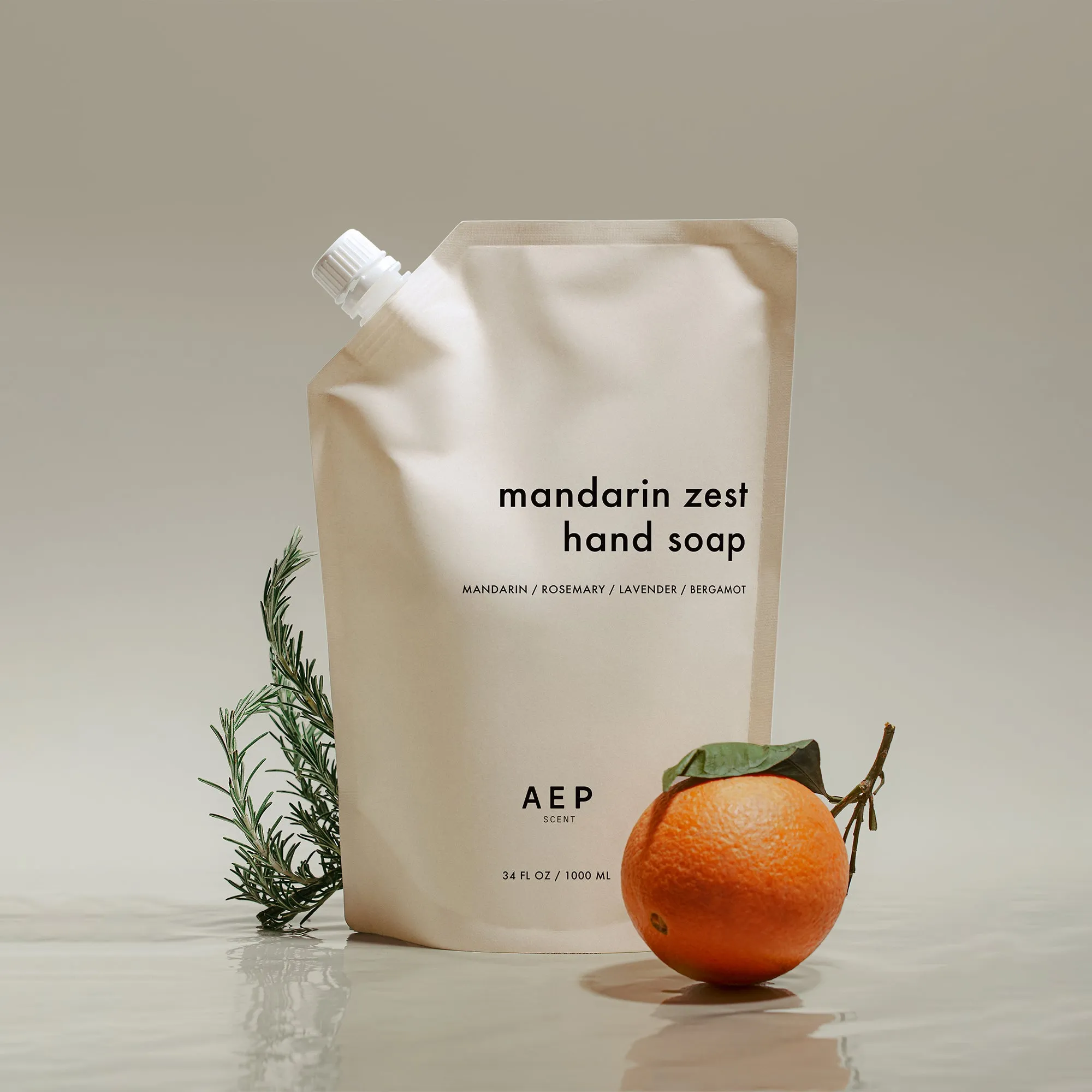
How kraft-paper pouches reduce plastic without downgrading the sink
A kraft-paper pouch changes the refill, not the look of the sink. AEP Scent pairs each pouch with a reusable dispenser designed to stay on display. The result is an eco friendly hand soap refill that keeps most of its packaging out of sight.
Less plastic in each refill
AEP Scent states that its kraft-paper pouches use 80-85% less plastic than traditional luxury soap bottles. Each 1,000 mL pouch can refill a standard 500 mL dispenser twice. That means one light refill pack replaces two new bottles while the permanent pump remains in use.
This shift matters because plastic lasts long after a bottle is empty. The EPA explains that plastic pollution may take 100 to 1,000 years or more to break down. Keeping a well-made dispenser and replacing only the soap cuts the flow of new packaging into the home.
A refill that suits a designed space
Sustainable packaging should not ask shoppers to accept a cluttered or basic-looking sink. The pouch stays in storage, while the reusable dispenser carries the visual weight. Its simple form fits a calm bathroom or kitchen without turning a daily care item into a loud green claim.
The soap inside also keeps scent at the center of the routine. The citrus hand soap refill blends a bright citrus profile with rosemary and cedar notes. Terra offers a warmer, earthy profile, while Coastal Sage Body & Hand Wash brings a crisp, woody scent to body and hand washing.
Premium standards without the usual markup
Lower-waste packaging works best when it supports a product people want to refill. AEP Scent makes its formulas locally in Los Angeles at an FDA MoCRA-approved facility. GMP standards and third-party microbial testing support quality, while full ingredient details help shoppers review what they use.
The local model also keeps production closer to the brand's California base. AEP Scent positions its soaps at 50-80% below the cost of luxury equivalents, without framing them as bargain products. The value comes from the direct model, reusable dispenser, and efficient refill format.
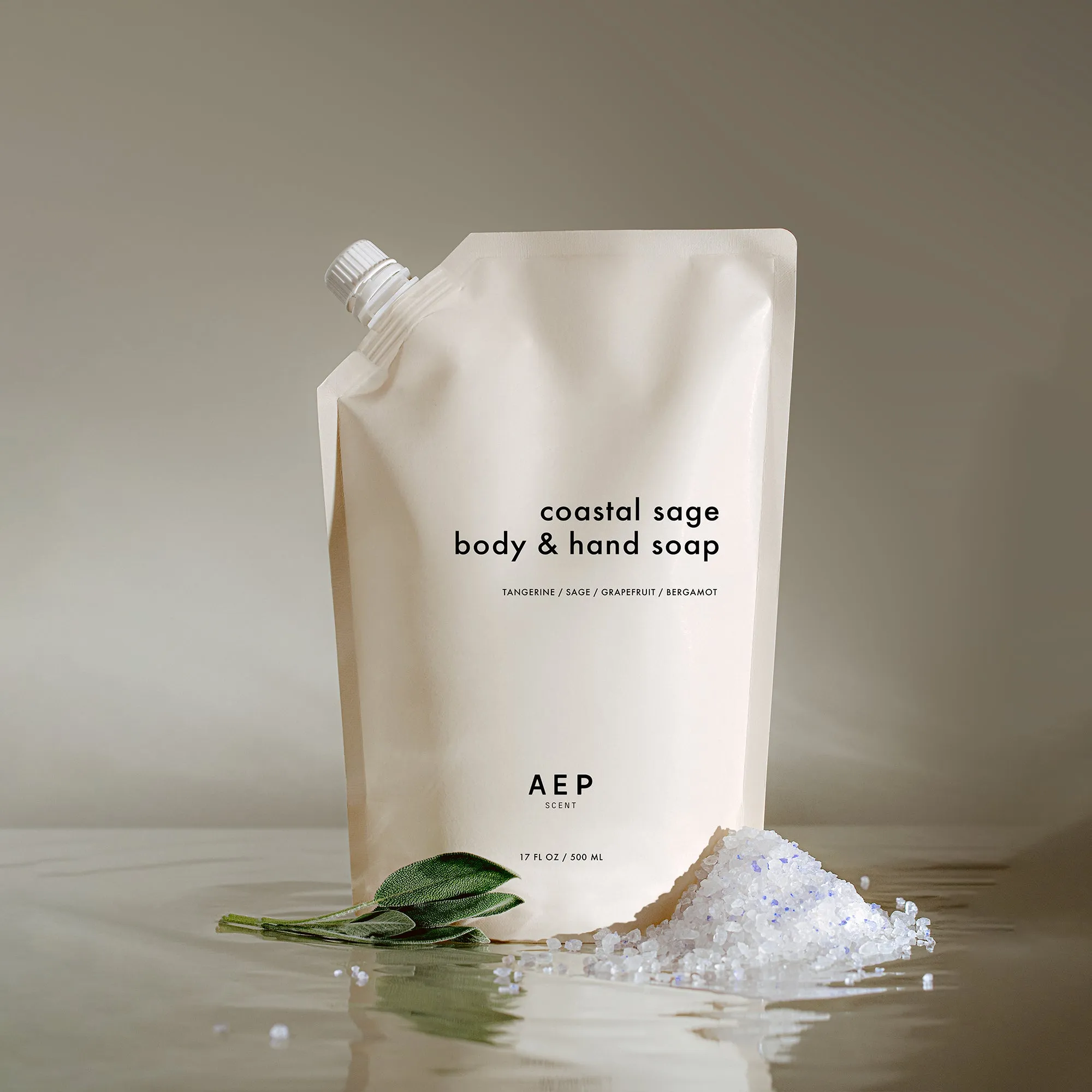
Scent choice can still match the room and the person using it. Shoppers who prefer vetiver, petitgrain, bergamot, and pumice can explore the earthy hand soap refill. Those who want an ocean-inspired profile can choose Coastal Sage, with ambrette seed, sea salt, sage, and citrus oil notes.
These pouches make the low-waste choice feel practical rather than spare. They store easily, refill a familiar pump, and preserve a polished sink setup. Clean formulas, clear scent profiles, and less repeated packaging work together in one daily-use system.
How do you choose the right refill for your home?
Start with the soap format your household will use every day, then compare the refill details behind it. The right eco friendly hand soap refill should fit your dispenser, routine, scent taste, and waste goals.
Your refill selection checklist
Liquid refills offer a familiar wash and pour straight into a standard liquid-soap pump. Foaming tablets need a foaming dispenser and water, while bars skip the dispenser entirely. Check the label for clear formula, fragrance, and use instructions before buying.
- Choose a format. Decide whether your household prefers liquid soap, foaming soap, a tablet mixed with water, or a bar.
- Review the formula. Look for a full ingredient list and clear fragrance notes. Avoid vague claims that do not explain what is inside.
- Estimate refill frequency. Note how quickly each sink runs out. A larger household or busy kitchen may need more frequent refills.
- Confirm dispenser fit. Check the refill volume and pump type. Standard liquid soap may not work well in a foaming pump.
- Compare packaging and origin. Consider how much new plastic each refill uses and where the soap is made.
- Pick the scent. Match brighter scents to lively spaces and grounded scents to calm, design-led rooms.
Packaging, size, and daily use
Refills work best when they replace repeated bottle purchases, not when they create a second packaging habit. This matters because the EPA reports that plastic pollution can persist for hundreds of years or longer, depending on conditions.
Compare pouch material, total volume, and the amount needed for each fill. AEP Scent's 1000mL pouch fills a standard 500mL bottle twice. Its kraft-paper refill design uses less plastic than repeated luxury bottles, and the soap is made locally in Los Angeles.
Also check storage space and your real rate of use. One larger pouch may suit a busy home, while a slower household may prefer fewer backups. Keep the refill sealed and follow its care directions between fills.
Choosing between Mandarin Zest and Terra
Scent is the final filter once the practical details fit. Choose the citrus hand soap refill for bright mandarin, rosemary, and cedar notes. It works well in kitchens and lively guest spaces.
For a warmer, grounded profile, try the earthy hand soap refill with vetiver, petitgrain, and bergamot. Terra suits calm bathrooms and spaces with wood, stone, or neutral finishes.
Are eco-friendly hand soap refills really better for the environment?
Yes, an eco friendly hand soap refill can be better for the environment. The gain grows when it replaces new bottles and supports repeated dispenser use. No refill format is perfect, though. Packaging materials, shipping needs, and actual household habits all shape the final impact.
Why less new plastic matters
Reducing new plastic is a sound place to start. The EPA reports that plastic pollution may take 100 to 1,000 years or more to decompose, depending on environmental conditions. It also links most plastics life-cycle emissions in 2019 to making new plastic from fossil fuels. Using one dispenser longer can reduce demand for that repeated production.
A refill works best when a sturdy pump stays in use for many cycles. Efficient pouches put the same soap into less packaging than a fresh rigid bottle each time. AEP Scent reports that its kraft-paper pouches use 80-85% less plastic than traditional luxury bottles. Its 1,000 mL pouch can refill a standard 500 mL bottle twice.
The refill habit
The package alone does not decide whether a refill is greener. A low-material pouch only helps if someone uses it and keeps the main dispenser. Buying a useful size can also prevent forgotten soap and wasted product. Reuse must become an easy routine, not a one-time good intention.
Different formats solve different problems. Tablets are compact and require mixing with water at home. Liquid pouches offer a familiar texture and need no mixing. Paper-based packs may still contain a thin plastic layer. The strongest choice is often the format that your household will refill again.
Hygiene and practical tradeoffs
Environmental gains should not weaken the product's basic job. The CDC explains that washing with soap removes germs and helps prevent infections. A refill should suit its dispenser, remain easy to use, and provide dependable soap at the sink.
Look at the full system before choosing. Favor less new plastic, an efficient refill pack, and a dispenser built for long use. Then check whether local recycling accepts the empty pack. A practical system used many times will usually do more good than an ideal package abandoned after one refill.
What ingredients should you check before buying?
Start with the full ingredient list, not the scent name or refill package alone. An eco friendly hand soap refill should make its formula easy to review before checkout. Clear labels help you compare cleansers, fragrance, color, and any exfoliant without guessing what is inside.
Formula labels and product claims
Check whether the brand lists every ingredient and explains its quality checks. If vegan, cruelty-free, sulfate-free, or phthalate-free matters to you, look for a clear statement for the exact formula. Do not assume one claim proves another.
Soap still needs to do its main job at the sink. The CDC explains that handwashing with soap removes germs and helps prevent infections. Choose a refill made for handwashing, then follow its label and dispenser directions.
Fragrance notes and exfoliants
Read the fragrance notes before choosing a large refill. Citrus, herbal, woody, and ocean-inspired scents can create different moods at a kitchen or bathroom sink. A citrus hand soap refill may suit a bright space, while an earthy scent may feel warmer.
Also check for physical exfoliants. Terra contains pumice, which adds texture during washing. That detail may appeal at a utility or kitchen sink, but it may not suit every guest bathroom. Review the listed texture before buying a pouch that will refill your bottle more than once.
A formula that fits the sink
Match the formula to where and how often people will use it. For a busy shared sink, a smooth liquid and a familiar scent may be the simplest choice. For a personal sink, scent character and texture may carry more weight. Consider who uses the sink and whether they prefer a scented or textured wash.
Check that the refill works with your dispenser and that the pump can handle its texture. Keep the ingredient list available for household members and guests who want to review it. If you prefer an earthy option with pumice, compare the earthy hand soap refill before choosing a larger refill format.
Frequently Asked Questions
Do eco-friendly hand soap refills really reduce waste?
They can be, especially when one refill replaces several new dispensers and uses substantially less packaging. The largest gains come from keeping one durable pump, choosing a concentrated or lightweight refill, and ordering efficiently. AEP Scent's kraft-paper refill pouches use 80-85% less plastic than traditional luxury bottles. This matters because the EPA reports that producing new plastic creates most plastic life-cycle emissions.
How do eco-friendly hand soap refill tablets work?
Refill tablets contain concentrated soap ingredients without the water found in ready-to-use liquid soap. Place the correct tablet in a compatible foaming dispenser, add the brand's specified amount of warm water, and let it dissolve. Do not guess the ratio or use a standard liquid-soap pump. Tablet refills can occupy far less shipping and storage space than full bottles.
Can I use any foaming soap dispenser for refill tablets?
Not always. Tablets made for foaming soap need a foaming pump, which mixes the liquid with air as it dispenses. Check the tablet maker's bottle-size and water instructions before mixing. A standard liquid-soap dispenser may not create foam and can dispense an unsuitable concentration. For liquid refill pouches, confirm that the soap viscosity works with your reusable pump
What ingredients are usually found in eco-friendly hand soap refills?
Ingredients vary by format and formula. Liquid refills commonly combine water, cleansing agents, fragrance or essential oils, preservatives, and ingredients that adjust texture or pH. Tablets use concentrated cleansing ingredients that dissolve after water is added. Read the full ingredient list rather than relying only on an eco-friendly label; shoppers with fragrance sensitivities can compare scented and unscented options
Ready to Reduce Waste With Every Hand Wash?
Keeping single-use bottles in your routine creates more packaging waste with every replacement, while delaying a refill system postpones the material savings. Starting now puts your reusable dispenser to work immediately, since each refill replaces another purchase that would require a fresh bottle. Choose a scent and refill format that fit your routine today, then make lower-waste hand washing the easy default for future orders.
Ready to reduce waste without giving up a polished sink-side experience?
Shop AEP Scent refill starter sets ->
to start with a reusable dispenser or replenish one you already own. Compare the options now, and contact AEP Scent if you need help choosing the right setup for your home.