


Paraben free hand soap is made without parabens, a group of preservatives used in some cosmetics to help protect formulas from microbial growth. The label tells you what the formula excludes. By itself, the label does not prove that a soap is safer, gentler, or better than every alternative. A thoughtful buying decision starts with the full ingredient list and the brand's manufacturing standards. It also considers the scent you enjoy and the packaging you want to bring into your home.
Shop AEP Scent's transparent hand soap and refill collection.
Quick answer: A "paraben free" label means a hand soap was formulated without ingredients from the paraben family, such as methylparaben or propylparaben. Shoppers may choose that label as a personal preference. Because liquid hand soap is water based, it still needs a well-designed preservation system and careful manufacturing. Compare the complete ingredient list, look for credible quality controls, and consider scent, refill packaging, and brand transparency before choosing.
Front-label claims can make a crowded soap aisle feel simple, but they rarely tell the whole story. Terms such as paraben free, phthalate free, vegan, cruelty-free, non-toxic, and refillable answer different questions. Understanding those differences makes it easier to choose a formula that matches your priorities without turning a preference into an unsupported health claim.
What Does Paraben Free Hand Soap Mean?
Parabens are a family of ingredients used as preservatives in some cosmetics. Preservatives help limit the growth of microorganisms that could affect a water-based product during its intended shelf life and use. If a bottle says "paraben free," the manufacturer is stating that it did not formulate the product with parabens. Common ingredient names in the family include methylparaben, propylparaben, butylparaben, and ethylparaben.
The label is useful for shoppers who prefer to avoid that ingredient family, but it needs context. The U.S. Food and Drug Administration's information on parabens in cosmetics says that scientists do not have information showing that parabens as used in cosmetics affect human health. That distinction is important. Choosing a paraben-free product can reflect your preferences, but the claim should not be treated as proof that the product prevents irritation, avoids health risks, or is inherently safer.
Why liquid soap still needs preservation
Hand soap is repeatedly exposed to everyday bathroom and kitchen conditions. A water-based formula can support unwanted microbial growth if it is not designed and manufactured correctly. Removing parabens does not remove the need for a preservation strategy. Instead, a formulator must create a complete system suited to the formula, packaging, expected use, and shelf life.
This is why an exclusion claim is only one part of product evaluation. A paraben-free formula can still be responsibly preserved, and a shopper should expect the brand to take product quality seriously. Manufacturing controls and microbial testing provide more useful context than a vague promise of formula purity.
What the claim does and does not tell you
A paraben-free claim tells you one clear fact: parabens are not part of the formula. It does not tell you whether the product is scented, vegan, cruelty-free, refillable, or made under documented quality standards. It also does not tell you whether you will enjoy the scent or skin feel. Those are separate considerations that deserve their own checks.
For a clear comparison, treat front-label language as the beginning of your research. Then read the ingredient list and supporting product information. A brand that publishes transparent ingredient lists allows you to evaluate what is present, not just what is absent.
How Do Common Hand Soap Labels Compare?
Clean-label shopping becomes easier when every claim is assigned a specific meaning. Some labels describe excluded ingredients, some describe how a product or its ingredients were developed, and others describe packaging. None is a universal score for quality. The best combination depends on what matters to you.
| Label | What it communicates | What to check next |
|---|---|---|
| Paraben free | The formula does not contain parabens. | Full ingredient list and quality controls. |
| Phthalate free | The formula does not contain phthalates. | Scent details and full ingredient disclosure. |
| Vegan | The formula does not use animal-derived ingredients. | Brand-specific ingredient information. |
| Cruelty-free | The brand states that the product is not tested on animals. | The brand's stated testing policy. |
| Non-toxic | A brand-level formulation claim that needs context. | Transparent ingredients and specific supporting information. |
| Refillable | The primary dispenser can be reused and replenished. | Refill material, plastic reduction, and reuse plan. |
Paraben free and phthalate free are different claims
Parabens and phthalates are different ingredient groups, so a product that excludes one does not automatically exclude the other. If both matter to you, look for both claims and confirm them against the available formula details. Avoid assuming that any single front-label term covers every ingredient preference.
Scented products make this distinction especially relevant because shoppers often have questions about how scent blends are described. The most useful brand response is transparency: clear claims, a complete ingredient list, and precise scent notes. Those details let you choose based on your preferences instead of relying on fear-based language.
Vegan, cruelty-free, and non-toxic answer other questions
Vegan and cruelty-free claims focus on animal-derived ingredients and animal testing practices. A non-toxic claim speaks more broadly about a brand's formulation approach, so it is most helpful when accompanied by ingredient transparency and manufacturing information. AEP Scent describes its formulas as non-toxic, vegan, and cruelty-free and makes transparent ingredient lists part of the shopping experience.
These claims can work together, but they should stay precise. For example, a vegan label does not automatically mean paraben free, and a paraben-free label does not automatically describe a product's packaging. Read each statement for the question it actually answers.
How to Read a Paraben Free Hand Soap Ingredient List
The ingredient list is where a broad front-label promise becomes specific. Start by finding the list on the product page or packaging. Look for recognizable ingredient names, but do not assume that a long or unfamiliar name is automatically undesirable. Cosmetic ingredients often use standardized naming so shoppers and regulators can identify them consistently.
If your priority is avoiding parabens, scan for names ending in "paraben," including methylparaben, propylparaben, butylparaben, and ethylparaben. Then review the rest of the list based on your other preferences. Transparent disclosure matters because it gives you the information needed to make your own decision.
Use a simple three-pass label check
- Confirm the main claim. Check the full ingredient list for the ingredient family you want to avoid rather than relying only on the front label.
- Review your other preferences. Look for clear information about fragrance, vegan and cruelty-free status, and any other characteristics that influence your purchase.
- Look beyond the formula. Evaluate manufacturing quality, testing, packaging, scent, and refill availability before comparing the complete product with alternatives.
This process keeps the decision grounded in useful evidence. It also helps prevent a common mistake: treating "free from" language as a shortcut for every other product characteristic. A label should inform your choice, not make it for you.
Ask practical questions when information is unclear
A product page should make the formula and product experience understandable. If it does not, useful questions include: Is the complete ingredient list available? What does the scent smell like? Where is the soap made? Does the brand use third-party microbial testing? Is a refill available for the dispenser?
Clear answers show that a brand expects informed shoppers. AEP Scent pairs transparent ingredient lists with specific quality information: its products are made locally in Los Angeles in a GMP and FDA/MoCRA-approved facility and undergo third-party microbial testing. Those facts do not turn a preference claim into a medical claim. They provide concrete context about how the product is made and evaluated.
Why Manufacturing and Testing Matter
A clear ingredient list helps you understand a formula, while manufacturing and testing information helps you understand the process behind it. This matters for any liquid hand soap, including one made without parabens. Preservation is not just the name of one ingredient. It is part of a larger system involving formulation, raw materials, production controls, packaging, storage, and intended use.
Good Manufacturing Practices, commonly shortened to GMP, are designed to support consistency and quality during production. FDA/MoCRA-related facility approval and compliance information can add another layer of accountability. Third-party microbial testing provides additional evidence that a formula has been evaluated for microbial quality. These details are more meaningful than an unsupported promise that a soap is "chemical free." That phrase is scientifically inaccurate because every cosmetic formula consists of chemicals.
What third-party microbial testing adds
Microbial testing examines a product for unwanted microorganisms according to the testing approach used. Independent testing can help support a brand's quality-control process by adding an outside evaluation. It does not mean the product offers medical benefits, nor does it replace proper use and storage. It is simply a concrete quality signal shoppers can consider.
AEP Scent uses third-party microbial testing for its formulas. For a shopper comparing paraben-free options, that information helps answer an important follow-up question: how does the brand support formula quality after choosing not to use parabens?
How to use a soap as intended
Once you bring a hand soap home, use and store it as directed. Keep the dispenser and refill opening clean, avoid adding water to the formula, and close refill packaging after use. Refill a clean, compatible dispenser rather than mixing unrelated soap formulas. These simple habits support the product experience the maker designed.
If you have a known ingredient sensitivity or a personal concern, review the full ingredient list and seek guidance from an appropriate qualified professional. A marketing label cannot diagnose a sensitivity or predict an individual's response.
Can Paraben Free Hand Soap Still Smell Premium?
Yes. A paraben-free label describes the absence of a preservative family, not the quality or style of a scent. A well-composed hand soap can still create a polished sensory moment at the sink. The right choice depends on whether you prefer bright citrus, aromatic woods, earthy notes, or another scent direction.
AEP Scent creates designer-inspired scent profiles while clearly maintaining its own brand identity. It is not affiliated with the luxury brands that may inspire a scent direction. The focus is an accessible, premium-feeling wash with transparent ingredients, rather than an implication of affiliation or an unsupported promise that a particular scent is healthier.
Mandarin Zest for a bright, aromatic sink
Mandarin Zest Hand Soap combines citrus-forward mandarin with rosemary and cedar. The result balances brightness with an aromatic, woody base. It is a practical option for shoppers who want their hand soap to contribute to the atmosphere of a kitchen or bathroom while still fitting their clean-label preferences.
Scent is personal, so detailed notes are more useful than generic claims of freshness. Knowing that Mandarin Zest includes mandarin, rosemary, and cedar helps you imagine the experience and compare it with scents you already enjoy.
Terra for an earthy, warm profile
Terra Hand Soap moves in an earthier direction with vetiver, petitgrain, bergamot, and pumice. It offers a warm, grounded alternative to a citrus-led profile. Comparing named notes makes it easier to select a scent for your space without treating fragrance preferences as a measure of formula safety.
Both scent profiles show why a paraben-free choice does not need to feel plain. Ingredient transparency and an elevated scent experience can coexist when the brand explains what it makes, how it makes it, and what the product is designed to smell like.
Shop all AEP Scent formulas and compare Mandarin Zest, Terra, and refill options.
Why Refill Packaging Belongs in the Decision
The ingredient list answers what is inside the soap. Packaging answers a different question: how much material is used to deliver and replace it? Evaluating both gives you a more complete view of the product. If reducing single-use plastic is a priority, a reusable dispenser paired with refill pouches can be more relevant than another front-label ingredient claim.
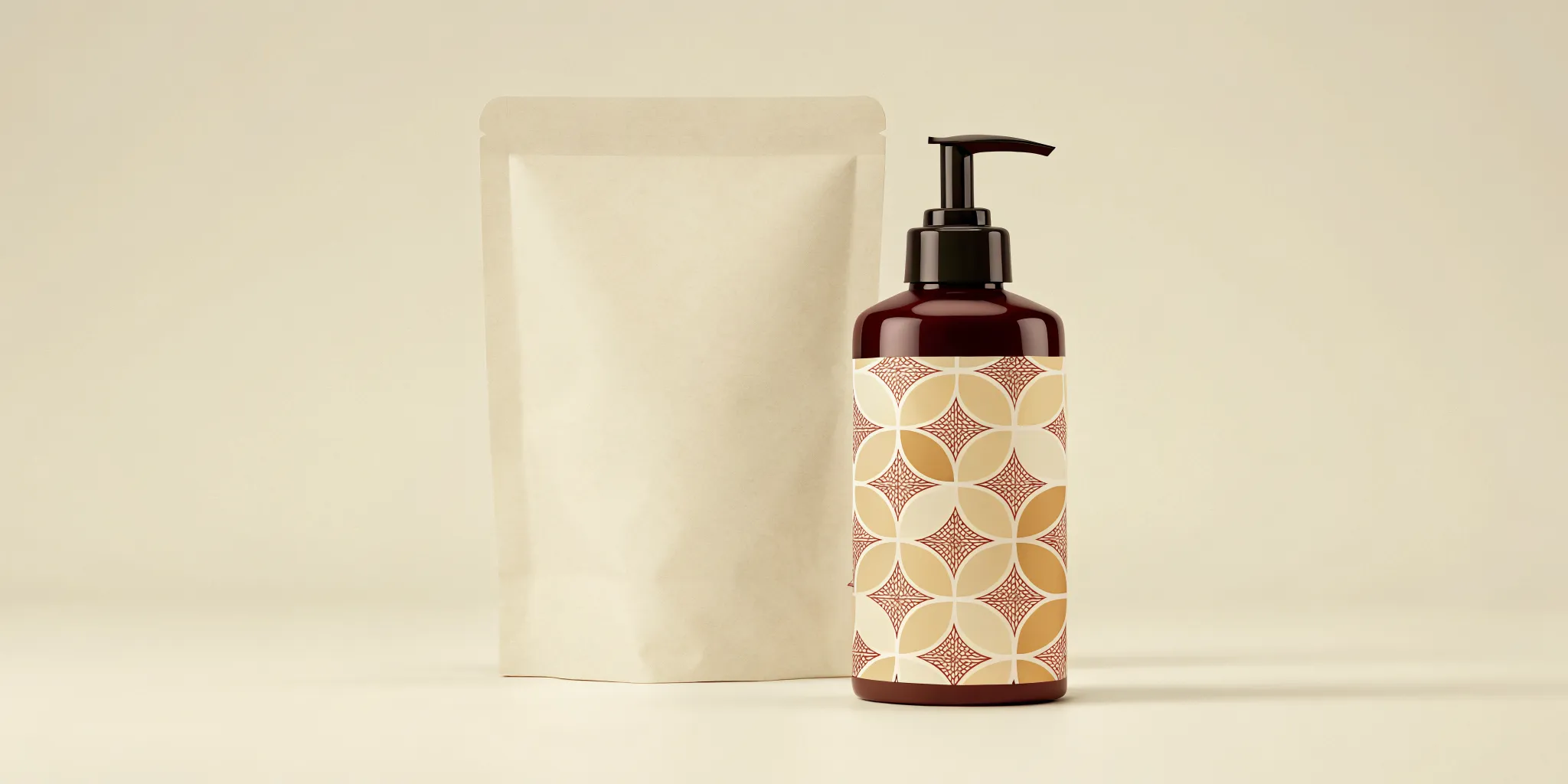
AEP Scent's kraft-paper refill pouches use up to 80-85% less plastic than conventional plastic packaging. The refill format is designed to keep a dispenser in use rather than replacing it every time the soap runs out. That supports a practical sustainability habit: reuse the durable component and replenish only the formula.
How to compare refill systems
Start with the brand's specific packaging statement. A quantified claim, such as up to 80-85% less plastic, offers more information than the word "eco-friendly" by itself. Then consider whether the refill is convenient enough for your household to use consistently. A refill system only reduces repeated dispenser purchases when people actually refill.
- Check whether the original dispenser is intended for repeated use.
- Look for a clear statement about the refill pouch and plastic reduction.
- Choose a scent and formula you will want to replenish.
- Keep the refill opening and dispenser clean during transfer.
- Follow local guidance when disposing of the empty pouch.
Formula transparency and packaging can work together
Shoppers do not need to choose between examining ingredients and reducing packaging. These priorities address different parts of the purchase and can be considered together. A transparent formula helps you understand what you use at the sink. A refill pouch helps you reduce the amount of new plastic associated with replenishing it.
This wider view is useful because "clean" is often used as if it describes one fixed standard. In practice, shoppers may use the term to express several priorities: excluded ingredients, transparent disclosure, vegan and cruelty-free formulas, quality manufacturing, and lower-plastic packaging. Specific evidence for each priority is more valuable than one vague umbrella claim.
A Practical Shopping Checklist
The best paraben free hand soap for your home is the one that matches your preferences and performs well in your daily routine. Use this checklist to compare products without relying on fear-based claims or assuming that one label answers every question.
- Confirm the exact keyword claim. Look for "paraben free" and review the full ingredient list for names from the paraben family.
- Separate preferences from health conclusions. Remember that the FDA says scientists do not have information showing parabens as used in cosmetics affect human health.
- Check ingredient transparency. Favor brands that make complete ingredient information easy to find and understand.
- Review other relevant claims individually. If vegan, cruelty-free, phthalate free, or non-toxic positioning matters to you, confirm each one separately.
- Look for manufacturing context. Consider documented GMP practices, facility information, and third-party microbial testing.
- Choose a scent you will enjoy. Compare specific notes such as the citrus, rosemary, and cedar of Mandarin Zest or the vetiver, petitgrain, bergamot, and pumice of Terra.
- Evaluate the refill system. Check the quantified plastic-reduction claim and decide whether the format works for your routine.
- Compare the complete value. Consider formula, scent, packaging, quality controls, and brand transparency together.
This approach makes shopping more precise. It respects your right to prefer a paraben-free formula without presenting that preference as medical advice. It also rewards brands that support claims with full ingredient disclosure, clear scent descriptions, credible production details, and specific packaging information.
Frequently Asked Questions
What does paraben free hand soap mean?
It means the hand soap was formulated without parabens, a family of preservatives that can include methylparaben and propylparaben. The claim describes what is excluded. It does not by itself show that the product is safer, prevents irritation, or avoids health risks.
Is paraben free hand soap safer?
A paraben-free label does not prove that a hand soap is safer. The FDA says scientists do not have information showing that parabens as used in cosmetics affect human health. Many shoppers still choose paraben-free formulas as a personal ingredient preference. Review the complete ingredient list and quality information when comparing products.
How can I verify that a hand soap is paraben free?
Read the full ingredient list and look for names ending in "paraben," such as methylparaben, propylparaben, butylparaben, and ethylparaben. Also look for a clear paraben-free statement from the brand. Ingredient transparency makes the claim easier to evaluate.
What else should I consider when choosing hand soap?
Consider the full ingredient list, scent profile, vegan and cruelty-free claims, manufacturing standards, third-party microbial testing, and packaging. If reducing plastic matters to you, look for a reusable dispenser and a refill pouch with a specific plastic-reduction claim.
A good label guide should leave you informed, not alarmed. Paraben free hand soap can be a confident choice when it aligns with your preferences, but the strongest decision considers the complete product. Look for transparent ingredients, meaningful manufacturing and testing details, a scent that fits your space, and refill packaging that supports your sustainability goals.
Shop AEP Scent paraben free hand soap and lower-plastic refill options.