


A well-chosen hand soap does more than cleanse. It helps set the tone of a powder room, guest bathroom, or hospitality space, especially when the scent feels considered rather than conspicuous. Terra brings an earthy, warm profile built around vetiver, sandalwood, petitgrain, and bergamot, with finely milled pumice adding texture to the hand-washing experience.
Vetiver sandalwood hand soap suggests dry, grounded earthiness balanced by a warm woody finish. Terra expresses that mood through vetiver, sandalwood, green petitgrain, and bright bergamot, while finely milled pumice adds a tactile exfoliating texture. The result suits a refined sink where fragrance, formula, and presentation all matter.
Choosing a scent for a sink is a small design decision with a noticeable effect. The bottle is seen at close range, the fragrance is experienced during a brief ritual, and the formula becomes part of a home's or property's daily rhythm. The best choice makes those details feel coherent without turning the basin into a display.
What Does Vetiver Sandalwood Hand Soap Smell Like?
Vetiver sandalwood hand soap typically combines vetiver's dry, earthy depth with sandalwood's smooth, warm woodiness. Citrus and green notes can keep the blend clear and fresh. In Terra, bergamot and petitgrain lift the opening while vetiver and sandalwood give the scent a more grounded direction.
The phrase describes a scent family rather than one fixed formula. Vetiver can smell root-like, mineral, dry, or subtly smoky depending on how it is blended. Sandalwood often adds a softer and rounder impression. Together, the notes can feel composed and architectural rather than sugary or sharply perfumed.
What does vetiver contribute?
Vetiver is associated with the roots of a grassy plant. In fragrance, it is often used for its earthy, woody character and dry finish. That makes it useful when a hand soap needs depth without the heavy sweetness of many gourmand profiles.
On the hands, vetiver can make a simple cleansing moment feel more grounded. It does not need to dominate. A restrained vetiver note can support natural materials such as stone, wood, linen, ceramic, and brushed metal. It also pairs naturally with green and citrus accents that keep the overall blend light enough for a sink.
What does sandalwood add?
Sandalwood provides a useful reference for warm woody softness. It is generally read as smoother and rounder than vetiver, which helps explain why the two notes work well together. The contrast gives the scent structure, then softens its finish.
For Terra, sandalwood is part of the confirmed product story. The product information identifies Santalum Album, or sandalwood, in the ingredient information, alongside vetiver, petitgrain, and bergamot. That distinction matters. A scent description should reflect the product page and ingredient information rather than rely on an assumption based on the product name.
How do petitgrain and bergamot change the impression?
Petitgrain brings a green, lightly bitter lift. Bergamot adds a bright citrus quality that keeps earthy notes from feeling too dense. These accents help Terra read as warm and clear at the same time.
The combination is especially useful in a powder room or guest bathroom. A sink fragrance should be noticeable during use, but it should not compete with candles, flowers, room fragrance, or the material palette. Green and citrus notes give the blend a clean opening, while vetiver and sandalwood create a quieter base.
Why Do Earthy, Woody Scents Feel So Refined?
Earthy, woody scents often feel refined because they create depth without demanding attention. Vetiver gives a dry foundation, sandalwood adds warmth, and green or citrus notes provide lift. This balance works with natural finishes and lets fragrance become a supporting design detail rather than the main event.
Refinement in home and body care rarely comes from making every detail louder. It comes from proportion. A scent can have enough character to be memorable while remaining easy to live with. Earthy and woody profiles often achieve that balance because they echo familiar materials and landscapes without smelling one-dimensional.
Balance makes the scent easier to live with
A dry note gives the fragrance a clear outline. A warm woody note gives it softness. A green or citrus note prevents the composition from feeling closed in. This relationship is what makes vetiver sandalwood hand soap feel versatile across different rooms.
In a small powder room, the fragrance can complement plaster, tile, stone, or timber. In a guest bathroom, it can add a considered touch without taking over a visitor's experience. The effect is subtle, but those subtle details are often what make a room feel finished.
Fragrance can support the material palette
Interior designers already consider visual texture, lighting, hardware, and textiles when shaping a space. Scent can support the same decisions. A dry vetiver profile can sit comfortably with a honed stone basin. Sandalwood's warmth can work with walnut, oak, leather, or warmer metal finishes. Bergamot and petitgrain can bring clarity to a more layered scheme.
The goal is not to match a scent literally to a countertop. Instead, consider the mood of the room. If the space is quiet, tactile, and natural, an earthy woody hand soap can reinforce that direction. If the room is already visually busy, a restrained scent can keep the experience balanced.
Why does restraint matter in shared spaces?
Hand soap is used by many people with different preferences. A strong fragrance can become distracting in a restaurant, hotel, spa, or office washroom. A softly layered profile offers a more considerate experience because it has presence without lingering like a personal fragrance.
For hospitality specifiers, this makes the scent part of a broader service decision. The soap should look intentional, feel appropriate at the sink, and perform a practical cleansing role. It should also be simple to replenish so the experience stays consistent from one room to the next.
How Should You Evaluate a Clean Hand Soap Formula?
Evaluate a clean hand soap formula by checking the full ingredient information, stated formulation standards, use directions, and packaging details together. Terra is presented as sulfate-free, vegan, and cruelty-free, with a transparent ingredient list and a formula that includes vetiver, sandalwood, petitgrain, bergamot, and finely milled pumice.
Clean is useful only when it is specific. Treat broad language as a reason to look closer at the product page, not as proof of a medical or performance outcome. For a daily hand soap, the most helpful information explains what the formula contains, how it is intended to be used, and what standards the brand states clearly.
Start with the complete ingredient information
A full ingredient list helps shoppers compare products on something more concrete than scent adjectives. It also makes a botanical reference more meaningful. When a product describes vetiver or sandalwood, the ingredient information can clarify whether those notes are reflected in the formula.
Terra's product information presents sandalwood, vetiver, petitgrain, and bergamot within its scent and ingredient story. Pumice is included for a finely textured, exfoliating feel. It is not a fragrance note, so the tactile experience should be considered separately from the scent profile.
Separate formulation standards from personal outcomes
Sulfate-free, vegan, and cruelty-free describe product or company standards. They do not guarantee that one formula will feel the same for every person. If a shopper has a known sensitivity, reviewing the complete ingredient list and following the product directions remains important.
Likewise, an aromatic hand soap should not automatically be described as antibacterial, disinfecting, therapeutic, or suitable for every skin type. Terra is a cleansing hand soap. Keep the product description within that cosmetic use case and avoid turning a scent or ingredient attribute into a health promise.
Consider where and how the soap will be used
Homes, design projects, and hospitality properties may have different needs. A household might prioritize the look of the dispenser and the feel of the wash. A designer may need clear product information for a client presentation. A hospitality team may care about consistent replenishment and straightforward storage.
Terra is made in Los Angeles, California, and its product information provides the formula details needed to evaluate it for a considered sink. Reviewing those details before specifying the product creates a more useful decision than relying on the word clean alone.
- Read the full ingredient information before selecting a botanical scent.
- Confirm the stated formula standards, such as sulfate-free, vegan, and cruelty-free.
- Consider texture separately from fragrance, especially when pumice is included.
- Match scent intensity and dispenser scale to the room's traffic and material palette.
For a closer look at the vessel and formula, visit the Terra hand soap product page.
How Does Terra Fit a Powder Room or Guest Bathroom?
Terra fits a refined powder room or guest bathroom when the space calls for a warm, earthy scent and a tactile hand-washing experience. Its vetiver, sandalwood, petitgrain, and bergamot profile works with natural finishes, while the reusable dispenser and pumice texture add practical detail at the basin.
A powder room is small, so visible and sensory details have an outsized effect. The dispenser should be easy to use, stable beside the basin, and visually compatible with the room. The scent should feel intentional when someone washes their hands, not like an unrelated product placed there at the last minute.
Terra's earthy direction works with stone, ceramic, timber, plaster, brushed metal, and linen. Vetiver provides dry depth. Sandalwood contributes warmth. Petitgrain and bergamot keep the impression green and bright. Together, those notes can support a quiet material palette without requiring the soap to match every finish.
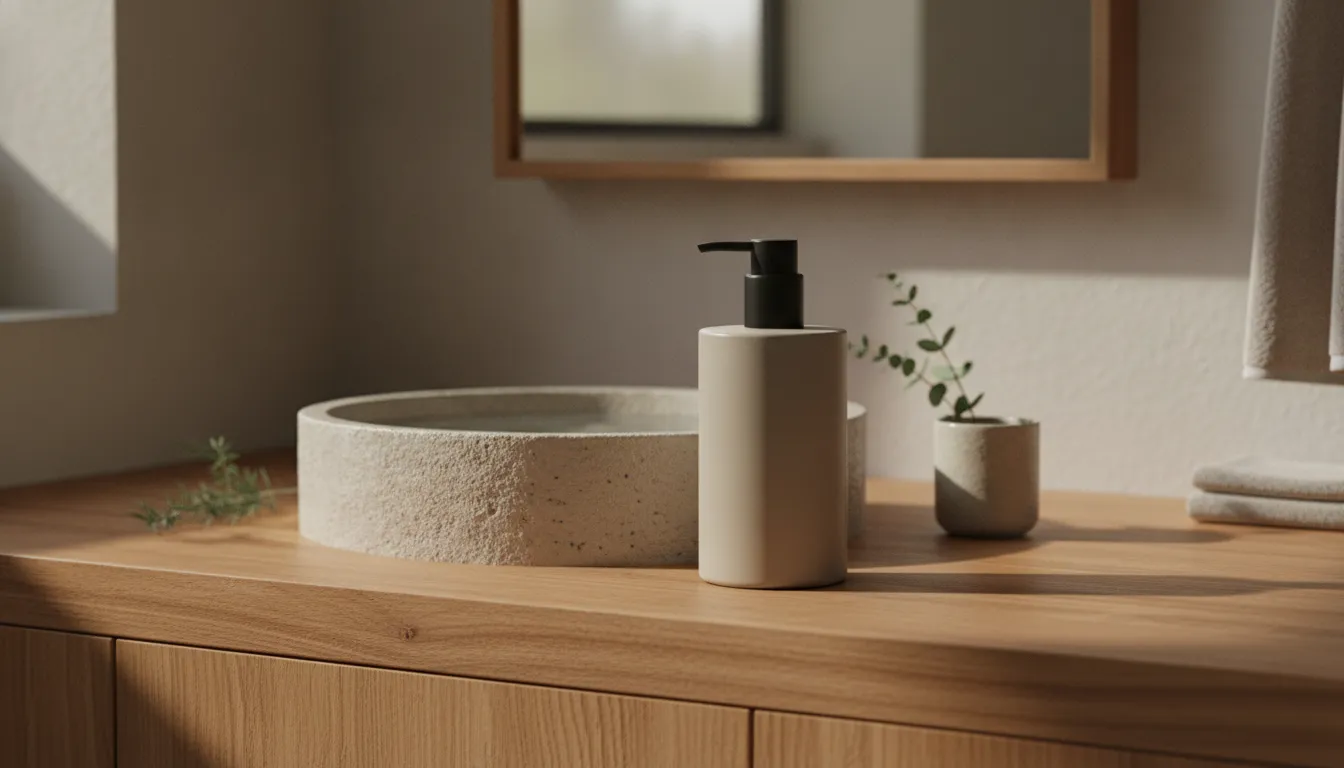
What works in a residential powder room?
In a residential powder room, place the dispenser where guests can reach it without crowding the basin. A shallow tray can contain occasional drips and create a visual boundary. Leave enough room for a hand towel and keep the arrangement easy to maintain.
The dispenser does not need to become the room's focal point. Its role is closer to a hardware finish or towel texture. It should reinforce the design language while remaining useful. Terra's warm scent can make the space feel more welcoming, particularly when the room uses natural stone, warm wood, or muted ceramics.
What works in a guest bathroom?
Guest bathrooms benefit from clarity. A substantial dispenser is immediately recognizable, and a single considered vessel avoids the visual clutter of several mismatched containers. Keep the bottle clean and positioned consistently if the space is used by visitors or photographed for a project.
Terra's finely milled pumice adds a gently granular feel. Because texture is a personal preference, use an amount that feels comfortable during hand washing. Describe the pumice accurately as exfoliating texture, not as another scent note and not as a treatment claim.
How can designers specify the experience?
For an interior project, specify scent, vessel, placement, and replenishment together. That approach gives the client a complete experience rather than a product name in isolation. It also helps a contractor, housekeeper, or hospitality team understand what should remain consistent after installation.
For related guidance on choosing a considered vessel, see this overview of high-end soap dispensers. A compatible dispenser and an appropriate scent should support each other at the sink.
Why Are Refillable Hand Soap Systems Worth Considering?
A refillable hand soap system keeps a reusable dispenser in place and replaces only the consumable formula. That can reduce packaging movement, simplify storage, and preserve a consistent sink presentation. Terra's laminated-paper refill pouches are designed to use about 80 percent less plastic than conventional packaging.
Refillability is both a material decision and an operating habit. The lasting vessel stays part of the room, while the refill pouch supports ongoing use. For a home, that means fewer full-package replacements. For a designer or hospitality team, it means the original dispenser and scent can remain consistent across a project.
How does the dispenser and pouch routine work?
- Choose and place the reusable dispenser where it is easy to reach and refill.
- Monitor the soap level as part of ordinary sink care or housekeeping.
- Keep the next pouch in a dry, organized supply area until it is needed.
- Refill the dispenser according to the product directions, keeping the vessel clean.
- Record the preferred scent and refill format when the sink is part of a larger installation.
This routine keeps replenishment predictable. It also protects the visual consistency that made the dispenser a good choice in the first place. For a multi-room property, a simple stock location and repeatable refill process can make the system easier for staff to maintain.
What does the laminated-paper pouch change?
The refill pouch is made with laminated paper, not an unqualified claim of pure paper packaging. The stated comparison is about 80 percent less plastic than conventional packaging. The exact benefit depends on the comparison basis and how the product is used. But the practical idea is clear: the refill format is intended to move less plastic through the replenishment cycle.
A quieter sustainability choice is often the one built into an existing routine. Reusing a dispenser and ordering refills does not ask the sink to look less considered. It connects a refined presentation with a more material-conscious operating pattern.
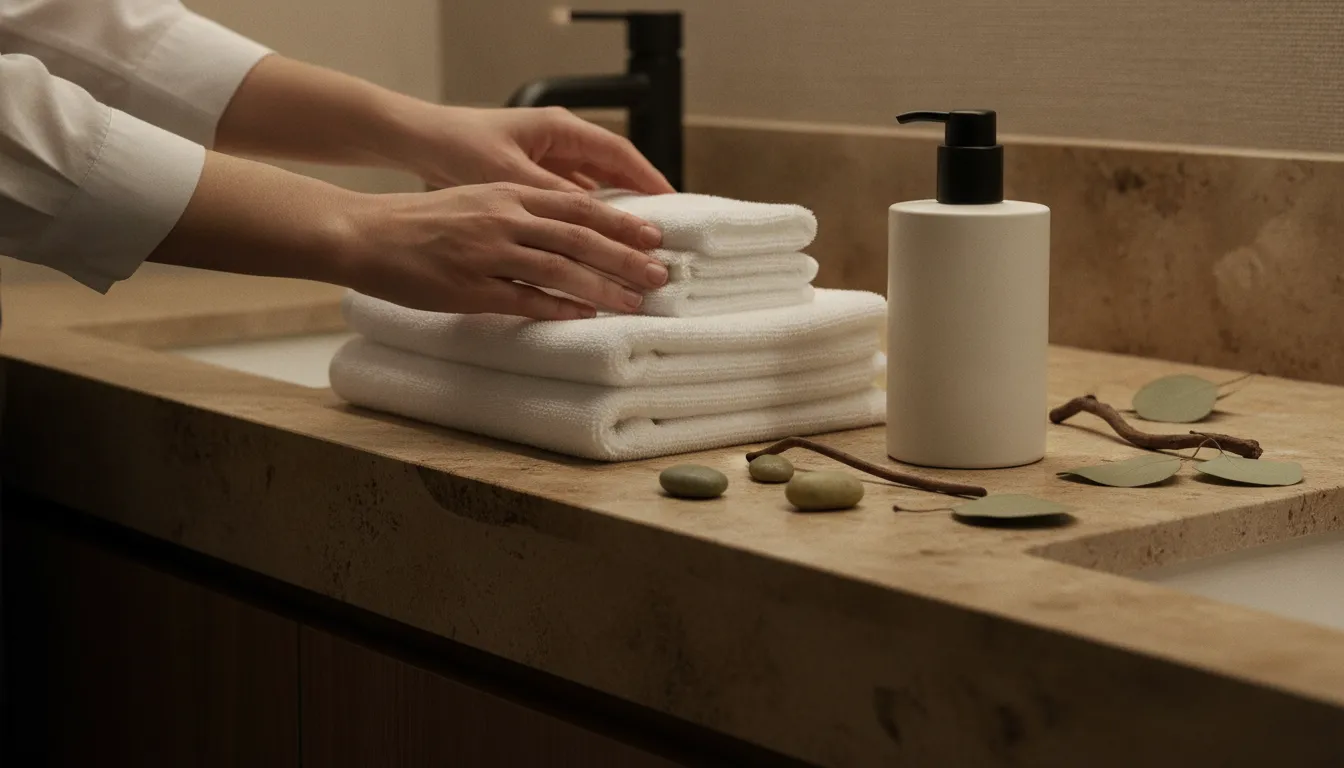
For ongoing use, the Terra refill 2-pack keeps the same earthy scent direction available for a reusable dispenser. Store refills away from excess moisture and plan replenishment around actual use.
What Should You Compare Before Choosing an Earthy Hand Soap?
Compare an earthy hand soap across five areas: scent balance, formula transparency, tactile feel, dispenser and refill format, and setting fit. A strong choice should make each area clear enough for a homeowner, interior designer, or hospitality specifier to evaluate without relying on vague luxury language.
A scent name is only the beginning of the decision. The hand soap will be touched, seen, smelled, stored, and replenished. Looking at the complete experience helps prevent a beautiful fragrance description from hiding practical details.
| Decision point | What to look for | Why it matters |
|---|---|---|
| Scent profile | Dry vetiver, warm sandalwood, green petitgrain, and bright bergamot. | The fragrance should have depth while remaining comfortable near a powder room or guest sink. |
| Formula transparency | Clear ingredient information and stated sulfate-free, vegan, and cruelty-free standards. | Specific details make it easier to review the formula for a household or project. |
| Tactile experience | A comfortable cleanse with finely milled pumice for exfoliating texture where desired. | Texture changes how the product feels during daily use and should be described accurately. |
| Dispenser and refills | A reusable dispenser paired with a laminated-paper refill pouch. | The format supports a cohesive counter presentation and a repeatable replenishment routine. |
| Setting fit | Appropriate bottle scale, scent presence, sink traffic, and room materials. | A considered hand soap should support the environment rather than compete with it. |
What should designers and specifiers document?
For a client installation, document the product name, scent notes, dispenser location, refill format, and care instructions. This makes the hand-washing experience easier to maintain after the project is complete. It also gives a hospitality or housekeeping team a practical reference without turning the specification into a long product brief.
It can be helpful to connect the soap selection with the broader room plan. A related guide to bathroom hand soap dispensers covers the vessel decision, while luxury bathroom design choices provides a wider context for finishing a room with restraint.
What should shoppers ask before purchase?
Ask whether the scent notes are confirmed, whether the full ingredient information is available, how the formula feels in use, and how replenishment works. If the product includes a packaging comparison, check what is being compared. Clear answers build more trust than broad claims about luxury or naturalness.
Terra offers a precise answer to those questions: an earthy profile with vetiver, sandalwood, petitgrain, and bergamot. A sulfate-free, vegan, and cruelty-free formula; finely milled pumice for texture; and a reusable dispenser with laminated-paper refills. That clarity makes it easier to decide whether the product fits the room and the routine.
Explore the Terra refill 2-pack
Frequently Asked Questions
What does vetiver sandalwood hand soap smell like?
It suggests a balanced, earthy profile. Vetiver brings dry depth, while sandalwood adds a warm, smooth woody character. Terra combines those notes with green petitgrain and bright bergamot, creating a clear opening over a grounded base. Terra's product information lists sandalwood among its notes and ingredient information.
Is vetiver sandalwood hand soap antibacterial?
Do not assume that an aromatic hand soap is antibacterial or disinfecting. Terra is presented as a cleansing hand soap, not as an antibacterial treatment. Follow the product directions and wash thoroughly with water. Choose a product with an explicit antibacterial claim only when that specific function is required.
Is this type of hand soap suitable for sensitive skin?
No hand soap should be treated as universally suitable for sensitive skin. Review the complete ingredient list, follow the product directions, and discontinue use if irritation occurs. Terra is sulfate-free, vegan, and cruelty-free, with full ingredient transparency, but those attributes are not a guarantee for every individual.
Why is vetiver used in refined home and body care?
Vetiver has a dry, earthy, subtly smoky character that gives a room a composed sense of depth without making the fragrance feel overly sweet. That makes it a natural fit for designed powder rooms, guest bathrooms, hospitality spaces, and other settings where the hand-washing experience should feel considered but understated.
How long does the scent of a woody hand soap linger?
Fragrance longevity varies with the formula, how often hands are washed, and the surrounding air. Hand soap is designed for a brief cleansing ritual. Its scent typically reads most clearly during use and shortly afterward rather than behaving like a personal fragrance or room diffuser.
Ready to Bring Terra Into Your Space?
If an earthy, warm hand soap fits the atmosphere you are creating, explore Terra hand soap for a refined daily ritual. Pair the reusable dispenser with the Terra refill 2-pack when you are planning ongoing use at home, in a guest bathroom, or across a considered hospitality setting. The result is a grounded scent experience with a practical replenishment system.
For more about the brand's approach to transparent, California-made home and body care, visit AEP Scent's About page.
By AEP Scent